
How to Choose the Right One for Your Needs
Best Wood Chipper in Australia: How to Choose the Right One for Your Needs
Choosing the best wood chipper in Australia isn’t about buying the biggest or most expensive machine.
It’s about matching the right chipper to the type of material you actually deal with — branch size, wood hardness, moisture content, and how often you plan to use it.
This guide is written by a professional manufacturer with over 20 years of hands-on experience in wood chipper design and production, working directly with real customers every day.
The goal is simple: to help you avoid buying the wrong machine.
What Does “Best Wood Chipper” Really Mean in Australia?
In Australia, there is no single wood chipper that is “best” for everyone.
Our conditions are quite different from many overseas markets.
When choosing a wood chipper here, you should consider: 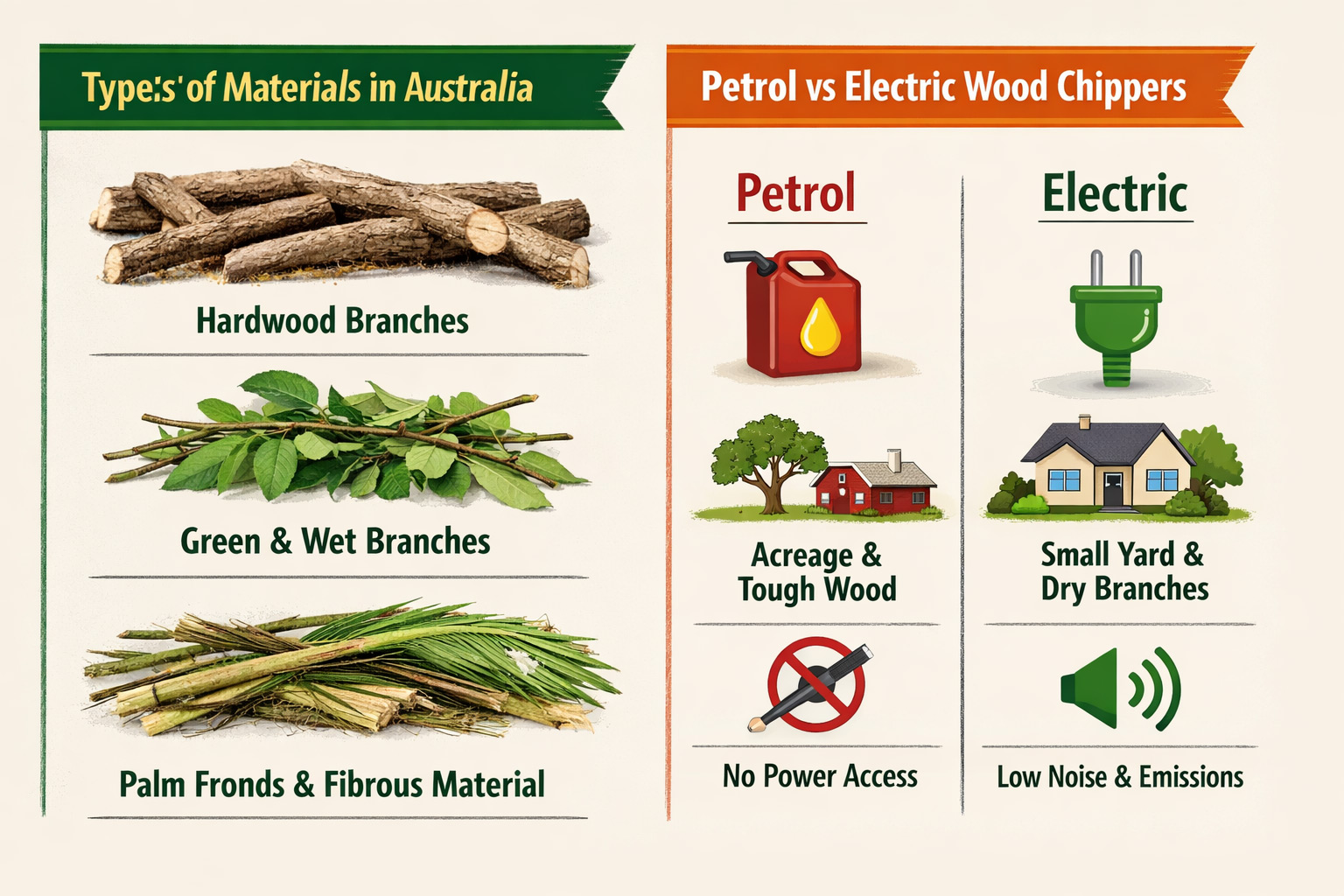
• Australian hardwood species, such as gum trees and other native timbers
• Green and freshly pruned branches, often with high moisture content
• Palm fronds and fibrous material, which behave very differently from wood
• Property size and usage frequency, from suburban gardens to larger acreage
The “best” wood chipper is simply the one that suits your material, your space, and how you actually plan to use it.
Petrol vs Electric Wood Chippers (Australian Conditions)
This is one of the most common questions we are asked.
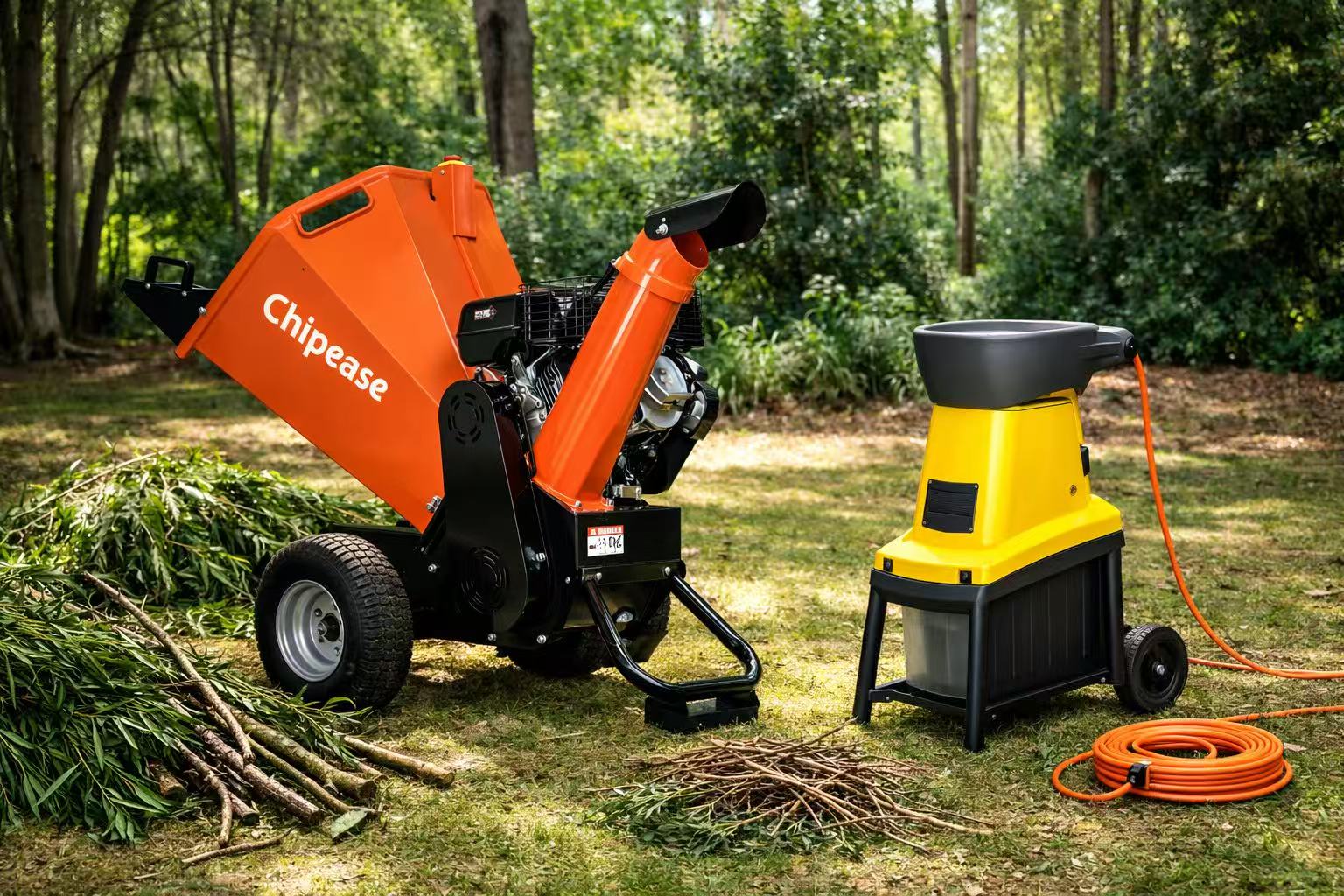
Petrol Wood Chippers
Petrol wood chippers are more commonly used in Australia because they:
• Handle tougher hardwood more effectively
• Perform more consistently with green or freshly cut branches
• Are suitable for properties without easy access to power
For regular pruning, higher volumes of green waste, or acreage use, petrol models are usually the practical choice.
Fresh & Green Branches: A Common Misunderstanding
Freshly cut, green branches are often assumed to be harder to chip — but in practice, this is not necessarily true.
When the cutting system is designed correctly, green and freshly pruned branches can actually feed very smoothly, especially on drum-style petrol wood chippers commonly used in Australia.
In real-world use, issues with green material usually don’t come from moisture itself, but from factors such as:
• Blunt or poorly maintained blades
• Cutting geometry not suited to flexible or fibrous material
• Feeding too quickly without allowing the drum to engage properly
With sharp blades, stable engine output, and controlled feeding, most fresh branches — including newly cut hardwood — can be processed reliably and efficiently.
Electric Wood Chippers
Electric wood chippers may be suitable if:
• You only process smaller branches
• The material is relatively dry
• Noise level and compact size are priorities
However, under typical Australian conditions, their cutting capacity and consistency are more limited, especially when dealing with green or fibrous material.
Common Mistakes When Choosing a Wood Chipper
Over the years, we’ve seen many customers purchase the wrong machine and later run into avoidable issues. Some common mistakes include:
• Assuming “self-feeding” means no operator input
Branch shape and material still play a major role.
• Choosing based on engine horsepower alone
Cutting system design is just as important.
• Only focusing on maximum branch diameter
Material type often matters more than thickness.
• Underestimating palm fronds and fibrous waste
These materials require technique and patience.
• Buying a machine that is too heavy or impractical to move
Power is not helpful if daily use becomes inconvenient.
So, Which Wood Chipper Is Right for You?
Rather than focusing on specific model names, it’s more helpful to think in terms of usage. Suburban Garden Use
If you mainly deal with:• Small to medium branches • Occasional pruning• Limited storage space
A compact petrol chipper, or a suitable electric model, is often sufficient.
Acreage & Regular Pruning
For:• Ongoing garden maintenance • Larger volumes of green waste• Mixed branch sizes
A mid-range petrol wood chipper is usually the most practical option.
Heavier Branches & Higher Workloads
If you regularly process:
• Thicker hardwood branches• Denser material• Larger quantities in a single session
A heavier-duty petrol wood chipper designed for this type of work is recommended.
These are the same considerations we use when advising customers in similar situations.
Our Honest Advice Before You Buy
A wood chipper is a very useful tool — but it is not suitable for every type of material.
Before buying, it’s important to understand that:
• Wood chippers are not designed for very soft, stringy, or vine-like material
• Palm fronds often need to be cut into shorter sections and fed more slowly
• Overbuying can be just as inconvenient as underbuying
In some cases, adjusting your approach — or using a different tool — can be more effective.
Being clear about these limits helps avoid frustration later.
Frequently Asked Questions
Is a wood chipper suitable for palm fronds?
Yes, many petrol wood chippers can process palm fronds, but feeding technique matters.
Cutting fronds into shorter sections and feeding them at a controlled pace usually produces the best results.
Do I really need a 15HP wood chipper?
Not necessarily. Engine size should match what you actually process.
Many users do not need the largest engine available.
Why does my wood chipper keep jamming?
Common causes include blunt blades, loose belts, or feeding fibrous material too quickly.
In many cases, it’s a usage issue rather than a machine fault.
Final Thoughts
The best wood chipper in Australia isn’t about marketing claims or rankings. It’s about choosing a machine that suits your real-world conditions, your material, and how you plan to use it. If you’re unsure which type of wood chipper is right for you, feel free to contact us.We’re happy to provide honest advice, even if that means recommending a smaller or simpler machine.